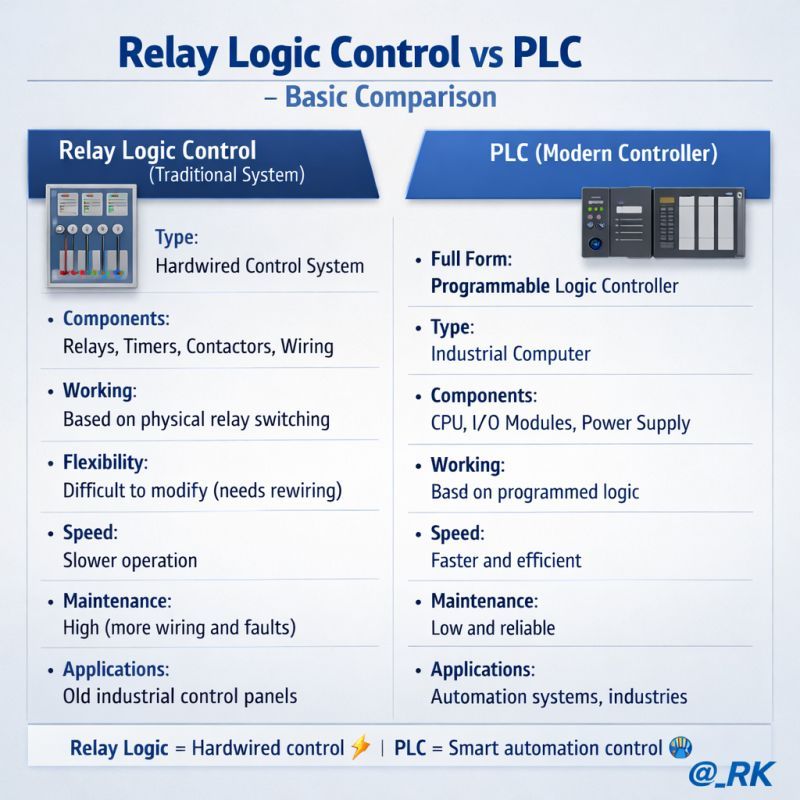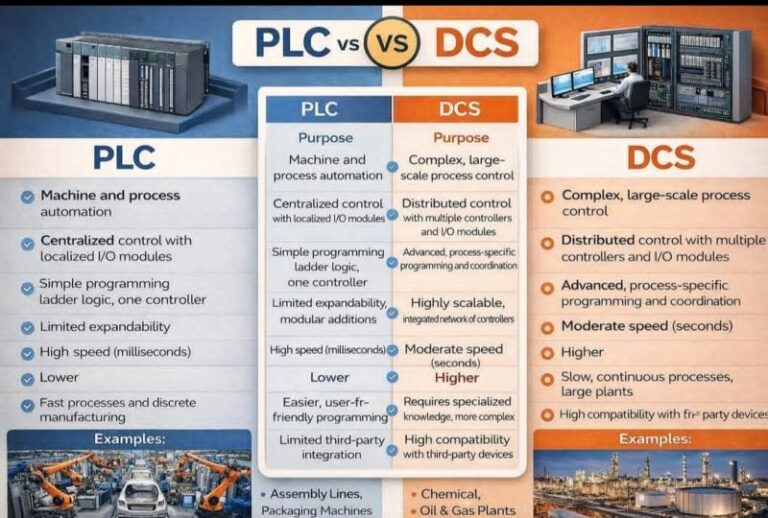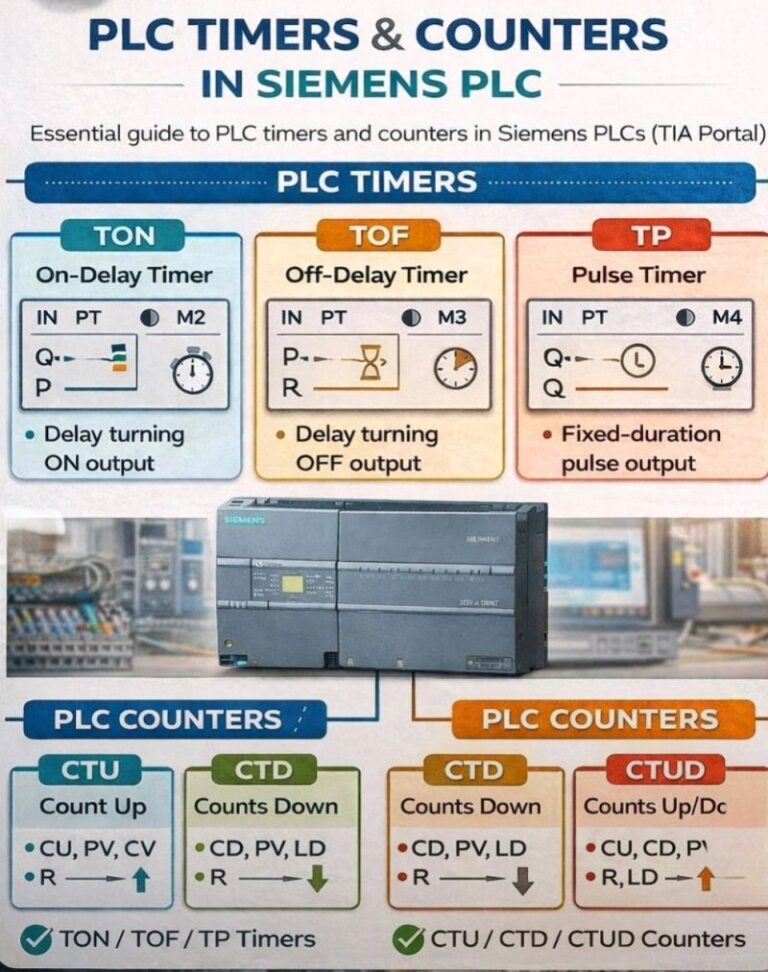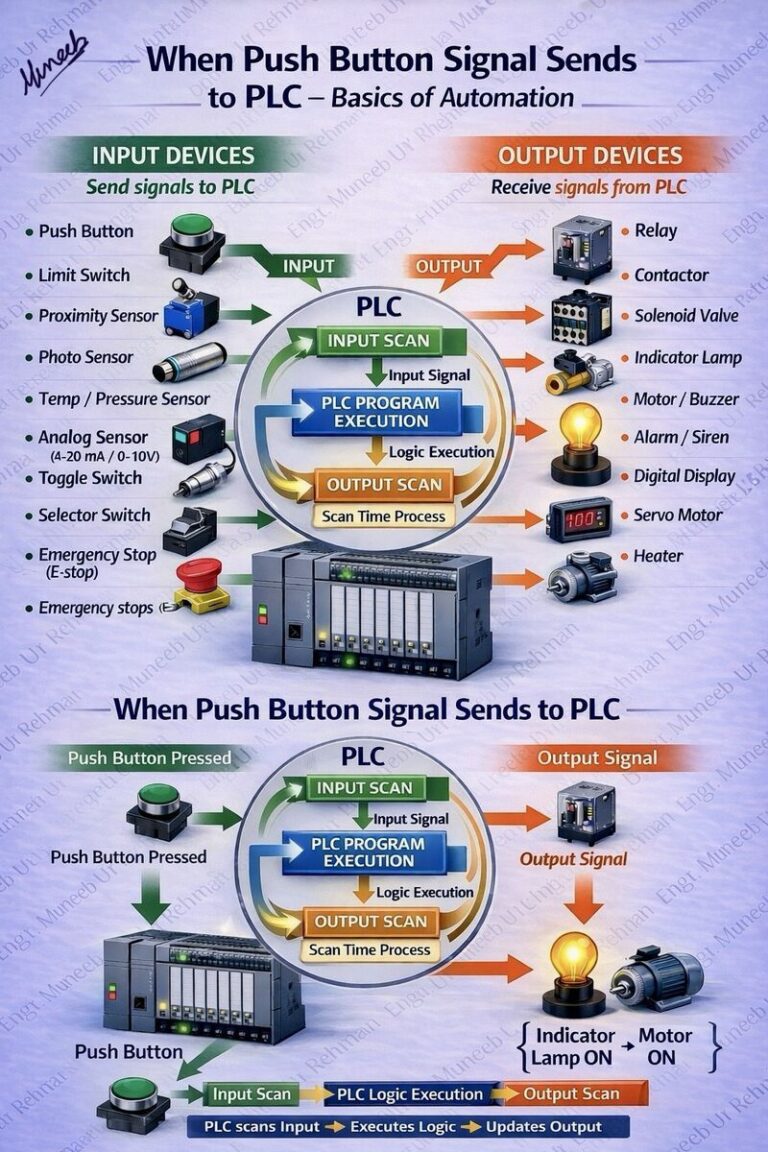
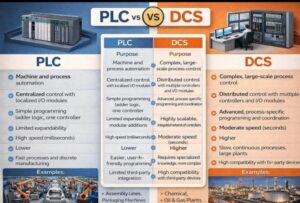
PLC (Programmable Logic Controller) and RLC (Relay Logic Controller) are both used in industrial automation, but they differ significantly in terms of functionality, complexity, and flexibility.
Key Differences
Definition:
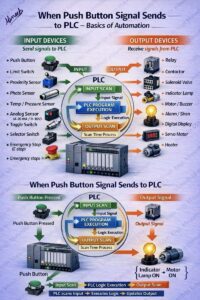
PLC: A PLC is a solid-state computerized controller designed to automate industrial processes. It uses software to perform logic operations and control machinery.
RLC: Relay Logic Controller (RLC) uses electromechanical relays to create control circuits. It relies on physical wiring and mechanical components to perform its functions.
Functionality:
PLC: Capable of performing complex tasks, including monitoring, controlling, and data processing. It can handle multiple inputs and outputs and can be programmed to execute various logic functions.
RLC: Primarily used for simple on/off control tasks. The logic is hardwired, making it inflexible and difficult to modify once installed.
Programming:-
PLC: Programmable using various industrial programming languages, such as Ladder Logic, which resembles traditional relay diagrams. This allows for easy updates and modifications to the control logic.
RLC: Does not require programming; the logic is determined by the physical arrangement of the relays. Changes to the logic require physical rewiring, which can be time-consuming and costly.
2 Sources
Complexity
PLC: More complex due to its ability to perform a wide range of tasks and its reliance on software. It includes components like CPUs, input/output modules, and memory for storing programs.
RLC: Simpler in design, consisting mainly of relays and wiring. However, this simplicity can lead to complications in larger systems due to extensive wiring.
Flexibility:-
PLC: Highly flexible; changes can be made through software without altering the physical setup. This adaptability makes PLCs suitable for dynamic industrial environments.
2RLC: Less flexible; any changes in logic require physical modifications, making it less suitable for applications that require frequent updates.
Cost:-
PLC: Generally more expensive upfront due to its advanced capabilities and components. However, it can be more cost-effective in the long run for complex applications due to reduced wiring and maintenance costs.
RLC: Typically cheaper for simple applications, but costs can escalate with complexity due to extensive wiring and maintenance needs.
Conclusion
In summary, while both PLCs and RLCs serve the purpose of controlling industrial processes,
PLCs offer greater flexibility, complexity, and functionality, making them more suitable for modern automation needs. In contrast, RLCs are simpler and more cost-effective for basic control tasks but lack the adaptability required for more sophisticated applications. Understanding these differences can help in selecting the appropriate control system for specific industrial requirements.